Download SSH Automator for macOS 10.10 or later and enjoy it on your Mac. The app iterates through hosts, one at a time, and executes the specified commands. Stdout and stderr are outputted to scrollable views. This Mac download was checked by our antivirus and was rated as safe. This app's bundle is identified as com.thomaswillson.getiPlayerAutomator. The most popular versions among Get iPlayer Automator for Mac users are 1.8, 1.3 and 1.1. This free software for Mac OS X is an intellectual property of Thomas Willson. Sep 24, 2008 Use the Mac OS X automator to download Internet files. Grabbing things off the Internet is common procedure for most internauts. This tutorial demonstrates a neat hack for the Automator Mac OS X application. To get started using Automator to scrape mp3s or other content from web pages, take alook. Keep Your Connection Secure Without a Monthly Bill. Download Jamo Automator for PC to install on Windows 10, 8, 7 32bit/64bit, even Mac. The weight of the apps is 3.1 MB. On the latest update of the Jamo Automator app on lmt-post-modified-info, there are lots of changes that are properly enjoyable on the Computer, Desktop & Laptop.
Automator Actions
Automator lets people automate time consuming and repetitive tasks by constructing workflows. A workflow consists of one or more actions, each of which performs a single, specialized task in the system or an app—such as opening a file, resizing an image, or opening a webpage. When a workflow runs, its actions execute sequentially, working together toward a common goal. For example, a workflow might include several actions that work together to download images from a webpage, resize them, and import them into Photos.
Within a workflow, information can flow from one action to the next like an assembly line. Most actions accept information as input, and then pass information as output (result) to the next action in the workflow. Actions also often include settings, which the user can adjust to refine the action’s behavior.
The system includes actions for performing tasks in most Apple apps, including Mail, iTunes, Photos, and Safari. Your app can extend the capabilities of Automator by providing actions of its own.
Consider offering at least a basic set of automator actions. Each additional action extends the power of Automator by letting people build a wider range of useful workflows. By providing actions, you enable users to streamline their processes and integrate your app with the system and other apps in unique ways.
Create narrowly-defined actions. Keeping actions simple ensures they can be combined in a variety of useful ways.
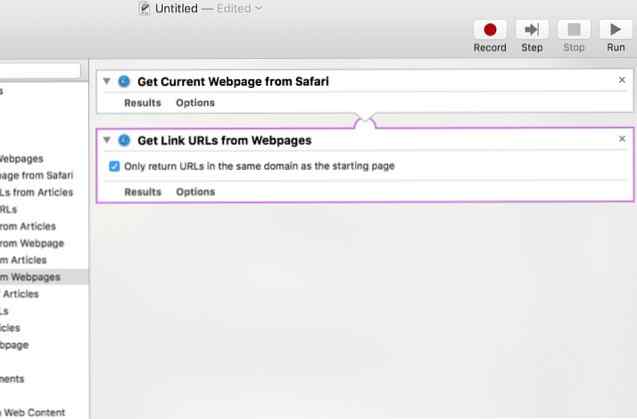
Make actions configurable. You can’t always predict how people want to use your app. By letting people configure actions to meet their specific needs, you magnify the usefulness of your actions.
Consider letting people configure settings at runtime. Even well-defined workflows often require flexibility. For example, a user might not want a workflow that resizes images to use the same output folder every time the workflow runs. To provide versatility, many actions can be configured to appear onscreen at runtime to allow on-the-fly adjustments.
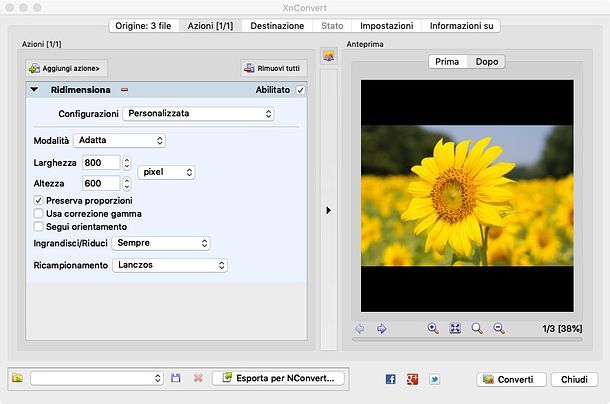
Allow an action to ignore its input whenever possible. Passing information between actions in a workflow isn't always possible or desirable. As such, create configurable actions that can accept or ignore any input they receive. When an action is set to ignore its input, the workflow should continue to operate. For example, the workflow shouldn't fail if your action can't locate a document to receive for input. Instead, the workflow skips over your action and proceeds on to the next.
Provide a conversion action when one of your actions produces nonstandard output. Most actions accept and produce common types of information, such as files, images, PDFs, and text. Automator tries to ensure compatibility between actions by performing automatic data conversions whenever possible. For example, when one action outputs files and the next inputs text, Automator automatically converts the files to text-based file paths so the workflow can proceed without fail. Some actions, however, produce more specialized content that Automator doesn’t understand, such as app-specific documents or objects. If your actions do this, you can provide a conversion action that doesn’t appear in a workflow, but runs behind the scenes whenever necessary to ensure compatibility between actions.
Communicate progress when it takes time to populate an action’s interface. Sometimes, an action must gather data to populate its interface. For example, the Get New Mail action gets a list of email accounts and displays them in a pop-up button. If it takes more than a second or two to gather necessary information, your action should show a progress indicator so the user knows that data is loading. (See Progress Indicators.) It’s also a good idea to disable interface elements while data loads so the user doesn’t try to interact with them.
Action Design
Provide a clear action title. Action titles should be short verb phrases that use title-style capitalization. They should clearly describe the action’s purpose so it’s easy to locate at a glance.
Create action titles that have between two and five words. For example, Eject Disk, New Mail Message, and Get Definition of Word.
Include your app name if it adds context. For example, Get Specified iTunes Items, Get Specified Finder Items, and Get Specified Calendar Items.
Provide sufficient descriptive information about an action. Automator includes a description area that shows detailed information about a selected action. People often use this area to learn about an action and decide whether to include it in a workflow. Each action should provide a detailed description consisting of one or more sentences that clearly describe the purpose of the action. In addition, each action should detail its input and result types, requirements, options, notes, warnings, related actions, version, and copyright information.
Minimize action height. Actions are stacked within a workflow. Since screen sizes are wider than tall, you should consider ways to minimize an action’s use of vertical space. For example, you could use a pop-up button instead of a series of radio buttons, even if there are only two choices. In general, use smaller controls and 10 pt margins. Make sure your entire action fits onscreen without requiring scrolling.
Don’t include labels that repeat the action’s title or description. Labels that repeat information available elsewhere take up space without providing value.
Don’t use boxes. An action doesn’t need to separate or group controls within boxes.
Avoid visible tab views. Instead, use hidden tab views to alternate between different sets of controls.
For developer guidance, see Automator.
Automation tools like IFTTT and Siri Shortcuts are popular options to streamline day-to-day tasks, but MacOS has long had a tool for this. Automator is not well known to anyone except power users, but when implemented correctly it can take care of minutia and help remove tedium from everyday tasks.
Automator doesn’t require programmingskills to set up. It’s a quick matter of dragging and dropping the relevantskills into the workflow. Here are a few of the best scripts you should checkout and install.
1. Clean Your Downloads Folder
The Download folder can grow cluttered inno time at all, especially if you frequently download photographs or files. Thenumber of zip files and installation packages alone can build up fast.Thankfully, there’s an easy solution: an Automator setup that moves files olderthan a certain date range to the trash.
Automator can feel a bit overwhelming at first, but it’s actually significantly easier than it might seem. Start by opening the program and selecting New Document, then choose Folder Actions. From there, choose Find Finder Items and drag it into the empty screen on the right.
Click the Options tab and choose Ignore this item’s input. If you don’t, it will move any files into the trash immediately. Select Move Finder Items to Trash and drag it below Find Finder Items.
Automator Mac Download Free
Once you have this action set up, it willautomatically move any files older than 90 days into the trash.
2. Rename Multiple Files at Once
macOS has a tendency to name certain typesof files a certain way, and it can be difficult to sort through themall—especially if you have 98 screenshots all named “screen shotxxx-xxx-xxx.” Thankfully, Automator can smooth out this process too.
First, you’ll make a new document in Automator. Select Workflow, and then select Files and Folders in the far-left window. Drag Get Selected Finder Items from the middle window into the right window, and then do the same for Rename Finder Items.
Automator App Mac Download
When you do, a popup will appear asking if you want to go through with the action and offer the ability to make a copy of the files before renaming them. While you can do this, it defeats the purpose of changing the files all at once.
Just type the text you want to search forinto Find and then the text you wantto replace it with in Replace. Thereare additional options you can use, such as searching for full name, basename,and extension. Once you’ve done this, you can just open Finder and then run theAutomator script.
3. Open Up Your Preferred Websites on Browser Start Up
Let’s face it: most of us have a routinewhen it comes to web browsing. Maybe it’s a collection of websites you like toread to stay up to date on your favorite subjects. Maybe it’s work related.Either way, you can save yourself some trouble by having Automator open yourmost commonly visited websites the moment you boot up the browser. Here’s how.

When you open Automator, choose Application. Choose Internet rom the left-hand window andselect Get Specified URLs from themiddle window. Drag it to the right-hand side. Once you’ve done this, enter theURLs you want to visit when you start your browser. (Tip: if you have the pageopen in Safari when you click “Add,” it automatically enters theURL.)
Next, select Display Webpages and drag it below Get Specified URLs. Save the Automator script. The next time youopen Safari, it will bring up the pages you’ve designated.
Other Automator Uses
Automator is a powerful tool with nearlyunlimited uses. While the scope of it can be confusing, a bit of trial anderror will teach you everything you need to know. You can do everything fromsend automatic birthday greetings with Outlook to combining text filestogether.
Automator can take the tedium out of the most repetitive tasks if you set it up correctly. The drag and drop interface makes it easy to arrange functions with no programming skills, and the “Run” button in the upper right corner of the application lets you test the Automator script before you save it.
If it doesn’t work exactly as you want it to, tweak a few settings and try again. And if it still doesn’t work, Apple has an active Automator community you can ask for assistance.